


Let’s be real: if you’ve planned more than a handful of events, you’ve probably had a moment where your AV didn’t work the way you wanted it to. A presenter’s slides wouldn’t load. The microphone cut out mid-keynote. The video embedded in someone’s deck decided to stream from YouTube instead of playing locally – and the venue WiFi had other ideas.
These things happen. But a lot of them are entirely preventable.
At 5 Tool Productions, we’ve spent years working with event planners across New England and beyond, and we’ve seen firsthand what separates a smooth, polished event from a stressful one. More often than not, the difference comes down to one thing: how well your AV team and your speakers were set up for success before show day.
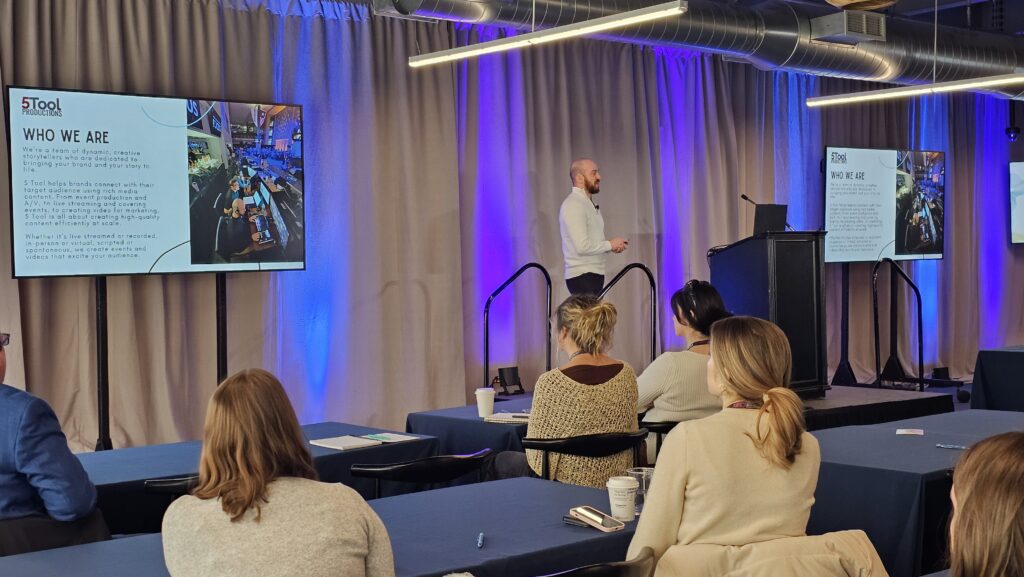
I recently had the opportunity to present about this topic at the Meeting Professionals International Educational Institute. This post covers the framework I discussed with that audience – including a checklist you can actually put to work for your next event.
You can view the full deck below, or read this blog to get the summary!
From Mic Checks to Media Files – 02 by Phil DiMartino
Reactive AV vs. High-Touch AV: There’s a Big Difference
Most people think of AV as a logistics item. You book a vendor, they show up with gear, and hopefully it works. That’s what we call Reactive AV. The team is focused on the gear list, files get collected at the last minute, and surprises show up on show day. Change orders follow. So does stress.
High-Touch AV is a different approach entirely. Instead of just responding to what’s in front of them, a high-touch AV team is actively working with you and your presenters in advance – understanding the goals of the event, walking through speaker needs, reviewing files ahead of time, and building contingency plans. The result? Confident presenters, a polished experience for your attendees, and a much calmer show day for everyone.
At 5 Tool, we believe the best events happen when the AV team is a true partner – not just a rental house. That means showing up to the planning process, not just the setup.
The High-Touch AV Workflow
Here’s what the process actually looks like end-to-end:
Discovery → Strategy → Speaker Management → Rehearsal → Execution → Post-Event Review
As an event planner, you know that the bulk of the work happens well before anyone walks into the room. The key to putting on any event is to start at the start in discovery. What’s the budget, objective, audience, and timeline for your event. All of the rest of your decisions come from this foundation.
Speaker management sits right in the middle of that workflow – and it’s where a lot of teams drop the ball. Let’s dig in.
What Is Speaker Management, Exactly?
Speaker management is the advanced preparation work done with event planners and presenters to make sure the AV setup actually matches what each presenter needs in order to deliver effectively. The question at the heart of it: is what we’ve specced for AV too much, too little, or just right?
Nobody’s perfect – we’ve had our own moments (let’s just say black shirts on black pipe and drape is a learning experience). But the goal is always to surface those gaps before they become problems on stage.
Why It Matters More Than You Think
Minor AV issues have a ripple effect that goes way beyond a few awkward moments on stage. Here’s what’s actually at stake:
Change orders. Skipping speaker management is one of the biggest drivers of last-minute gear changes on-site. That means either paying a premium to get what you need in a hurry – or not being able to get it at all.
Stress and errors. Even when last-minute changes are executed, they create pressure for your presenters and your tech team. Changes on the fly to a pre-planned workflow are more likely to cause technical issues – and attendees notice.
Credibility risk. When a speaker doesn’t perform well because the setup wasn’t right, it reflects on the event. Full stop.
Lost revenue. At many of the events we work, the main stage is a showcase for sponsors – an add-on to their exhibitor investment. If their speakers aren’t supported properly, you’re looking at lost renewal revenue for future events.
The Speaker Management Checklist
Check out the deck below to see the full checklist!
The Speaker Management Checklist – 5 Tool Productions by Phil DiMartino
Real Events, Real Lessons
Tufts Black Maternal Health Conference
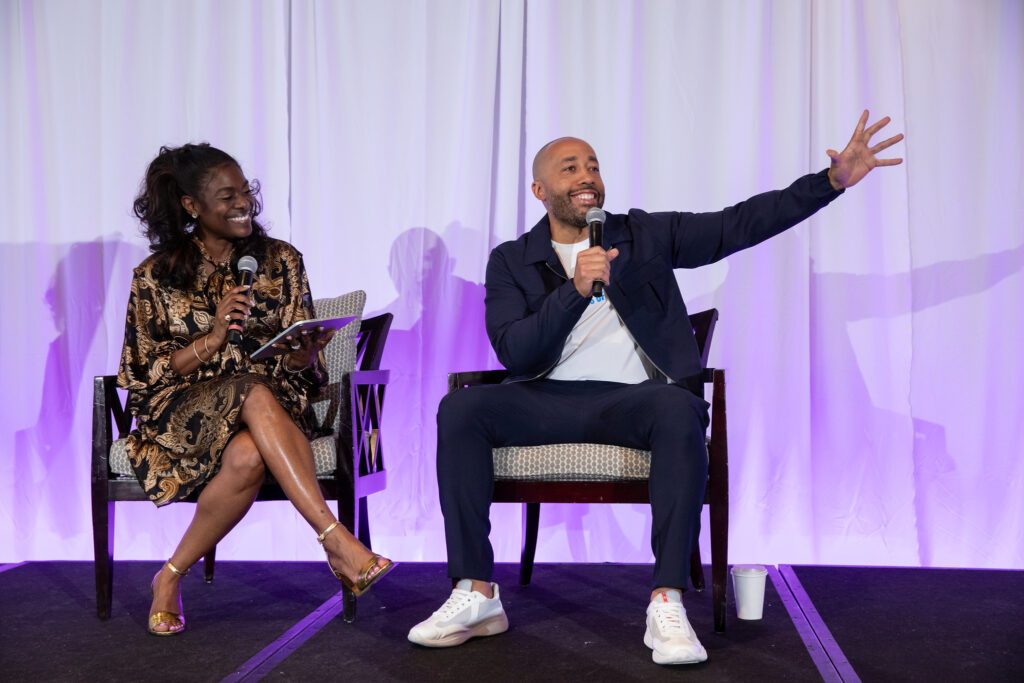
For this event, our team made content decisions based on discovery conversations and what we’d learned from prior years. One key outcome: we opted for a blend of pre-recorded and live content rather than fully live presentations.
Why? Because speaker management conversations revealed that our best live event experience – for attendees and presenters – would come from pre-recording sessions and hosting live Q&A. Because of timing, logistics, and the heavy emotional weight of the topics being discussed, pre-recording sessions allowed us ultimate control over a tightly-packed day. The event looked polished and intentional to attendees. That’s what good speaker management actually looks like in practice; not just collecting files, but asking the right questions and making smart decisions early.
The goal is always this: preparation and technical expertise working together so the event looks effortless to attendees, even when there’s complexity behind the scenes.
Administrative Professionals Conference
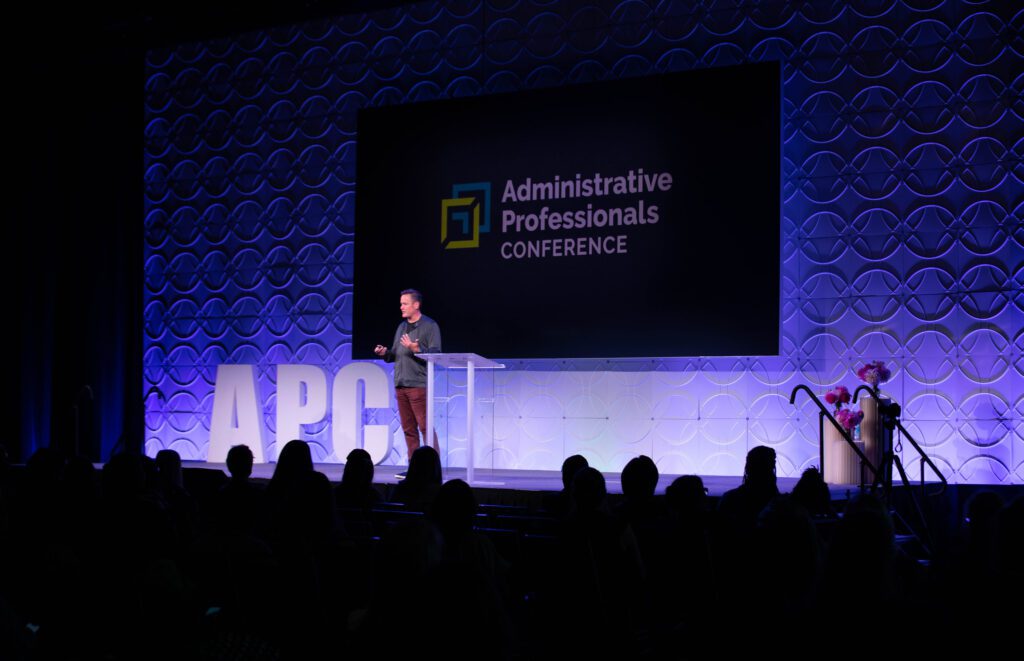
For APC 2025, we ran individual prep sessions with every single presenter – for both the main stage and multiple breakout rooms. That level of attention pays off in a way that’s hard to quantify but easy to feel when you’re on-site.
This event also illustrated what we call the AV Translator role – where our team bridges the gap between event planners and an in-house AV vendor.
The combination of speaker management and our work alongside the in-house AV vendor helped create a clean live event – and allowed the event organizers to take care of the many other responsibilities they had on-site.
5 Takeaways for Event Planners
1. High-Touch AV is an effective way to minimize surprises and help your event run more smoothly.
The investment in pre-event collaboration pays off on show day – every time.
2. The discovery phase is critical to making your AV team a partner, not just a rental house.
Use the B.O.A.T. framework. Know your budget, your objective, your audience, and your timeline – and share that context with your AV team early.
3. Over-communicate with presenters about tech and AV.
Tell them what you’re setting up. Ask them what they need. Do it early, and do it again closer to the event.
4. Don’t overlook audio.
It’s the cornerstone of a good event experience and far more complicated than it appears. Bad sound leads to a distracted audience, and a distracted audience doesn’t engage with your content – or your sponsors.
5. Even when you’re working with an in-house AV vendor, consider bringing in a dedicated technical partner.
A second set of eyes on the quote, the layout, and the speaker needs can save you money, catch mistakes, and take a significant operational burden off your plate.
Final Thought
The gap between a stressful event and a seamless one is almost always closed in the weeks before show day – not in the final hour of setup. Building a speaker management process into your event planning workflow is one of the most practical things you can do to protect the investment you’ve made in your event.
If you want to talk through what that looks like for your next event, we’re always happy to connect!